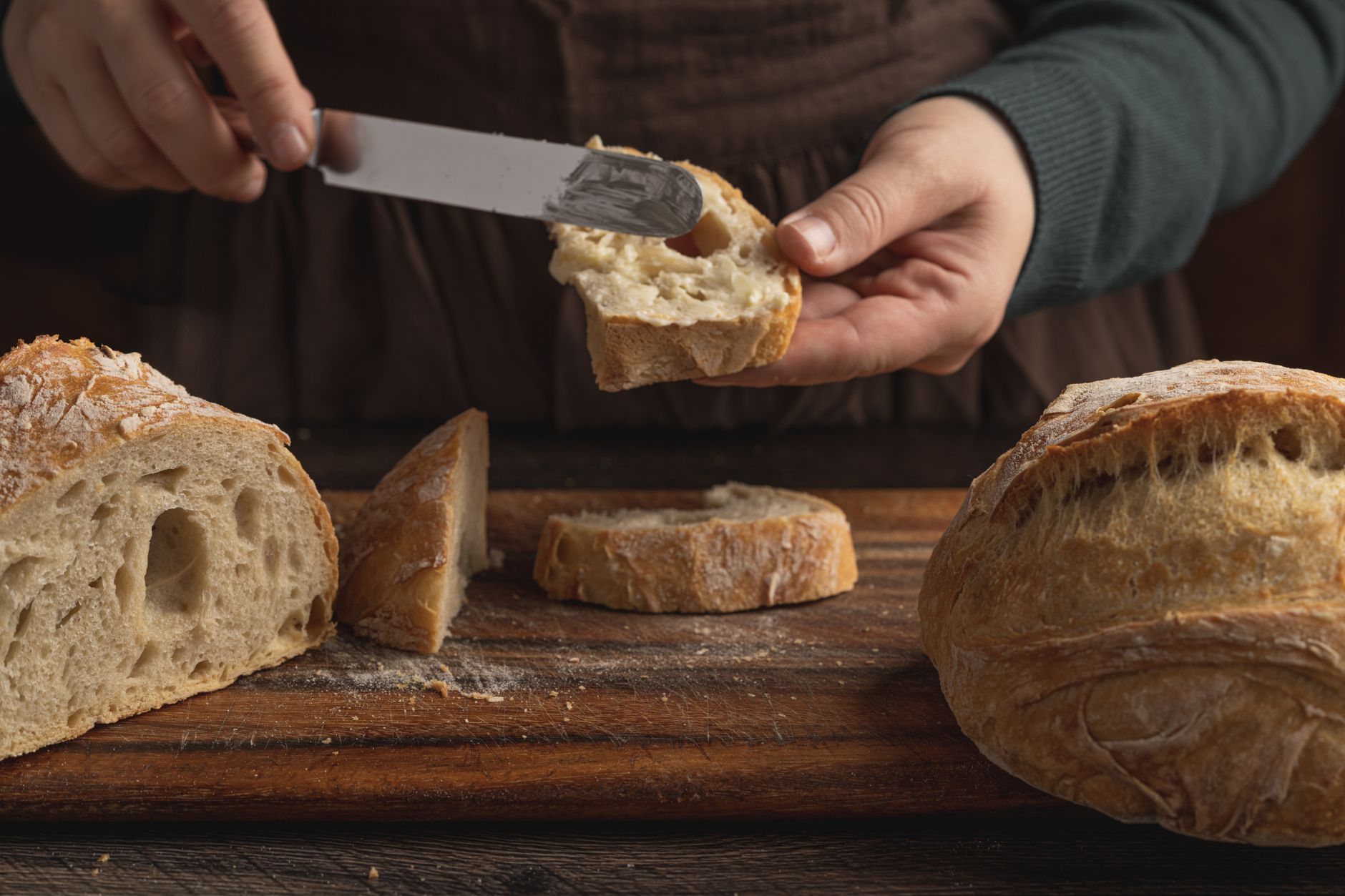
Butter is one of the oldest cooking fats in the human diet. Grass-fed butter is more nutrient-dense than conventional butter, with higher levels of fat-soluble vitamins, conjugated linoleic acid (CLA), and a better omega-3 to omega-6 ratio. It's also one of the most useful fats in any kitchen, equally at home in a cast-iron pan or on bread.
Why grass-fed butter is different
Butter from grass-fed cows has a meaningfully different nutritional profile than conventional butter. Grass-fed dairy contains higher levels of:
CLA (conjugated linoleic acid)A fatty acid found primarily in ruminant fats. Grass-fed butter contains 3–5x more CLA than conventional butter. Research has associated CLA with beneficial metabolic effects.
Vitamin K2 (MK-4)Grass-fed dairy is one of the few significant food sources of vitamin K2. K2 is involved in calcium metabolism and cardiovascular function. Most people get very little K2 in their diet.
Omega-3 fatty acidsGrass-fed butter has a better omega-3 to omega-6 ratio than conventional butter, though butter is not a significant source of omega-3s in absolute terms.
Beta-caroteneThe yellow color of grass-fed butter comes from beta-carotene in the grass. Conventional butter is paler and more white because grain-fed cows convert beta-carotene to vitamin A more completely.
Fat-soluble vitaminsVitamins A, D, E, and K, all fat-soluble, are more abundant in butter from pastured cows.
Best grass-fed butters
Look for brands with confirmed grass-fed sourcing, not just "natural" claims.
Our Pick
Kerrygold Pure Irish Butter, Top Pick
Made from the milk of Irish grass-fed cows. Ireland's climate allows year-round grazing, and Kerrygold's cows spend the vast majority of their lives on pasture. The flavor is noticeably richer than American commodity butter. The gold wrapper is unsalted; the silver is salted. Widely available.
Our Pick
Vital Farms Pasture-Raised Butter
American pasture-raised butter with verified sourcing from family farms. Vital Farms' standards require outdoor access and pasture rotation. The flavor is excellent and the sourcing is more verifiable than some import brands. Available salted and unsalted.
Our Pick
Anchor New Zealand Butter
From New Zealand grass-fed cows. New Zealand has strict land management requirements and a climate that allows year-round pasture. Anchor is a co-op brand with consistent sourcing. Similar profile to Kerrygold, often slightly more affordable.
How to cook with butter
Butter has a smoke point of around 300–350°F, which is lower than tallow or avocado oil. For high-heat applications, use clarified butter (ghee), which removes the milk solids that burn and raises the smoke point to around 450°F.
Sautéing at medium heatThe best application for whole butter. Start with a cold pan, add butter, let it melt and foam, then add your food. The foam indicates moisture escaping; add food when foam subsides.
Finishing saucesA tablespoon of cold butter whisked into a pan sauce at the end creates richness, gloss, and body. This technique (monter au beurre) is a pillar of French cooking.
BakingButter is essential in pastry, cookies, and cakes. Its water content (around 15–18%) creates steam during baking, contributing to texture and rise. Grass-fed butter's higher fat content produces richer results.
Compound butterSoften butter and mix in herbs, garlic, lemon zest, or anchovies. Roll in plastic wrap, refrigerate, and slice onto steaks or fish. One of the highest-impact, lowest-effort kitchen preparations.
Use clarified butter for high heatRemove water and milk solids by slowly melting butter and skimming the foam. The clear golden fat that remains is ghee, it handles high heat without burning and has a longer shelf life.
Quick facts
Smoke point~300–350°F (whole butter) / ~450°F (clarified/ghee)
Fat composition~63% saturated, ~26% monounsaturated, ~4% polyunsaturated
Omega-6 contentVery low (~2% linoleic acid)
Best forSautéing, sauces, baking, finishing, compound butters
Grass-fed advantageHigher CLA, vitamin K2, beta-carotene, better omega ratio
StorageRefrigerate; freeze for long-term storage